A good perimenopause breakfast has about 25 to 30 grams of protein, and you can get there without a blender: two eggs with a mug of bone broth hot chocolate, overnight oats made with Greek yogurt, cottage cheese on toast, or a protein latte made with dairy milk. Below are ten easy options with protein counts for each.
In this article
Most women I talk to eat the least protein at breakfast and the most at dinner. In perimenopause, when holding on to muscle gets harder, flipping that pattern is one of the simplest changes you can make.
Why protein at breakfast matters in perimenopause
The first reason is muscle. As estrogen falls, women tend to lose muscle mass and strength (Maltais and colleagues, 2009), and eating enough protein is one of the few levers you control. How you spread it may matter too. In one small study, adults who ate about 30 grams of protein at each meal had higher 24-hour muscle protein synthesis than adults who ate the same total mostly at dinner (Mamerow and colleagues, 2014). Breakfast is the meal most of us skip or skimp on, so that's where the easy gains are.
The second is fullness. In a study of late-teen girls who usually skipped breakfast, a higher-protein breakfast kept them fuller through the day and cut down evening snacking on high-fat foods compared with skipping (Leidy and colleagues, 2013). It was small and in a much younger group, so I won't promise the same result for you. It does match what a lot of women tell me, though: with protein in the morning, the 3 p.m. slump and the late-night pantry trip happen less.
For the bigger picture, including a body-weight-to-grams table, see how much protein you need in perimenopause.
Protein in common breakfast foods
| Food | Protein |
|---|---|
| 1 large egg | About 6g |
| Greek yogurt, plain, 7 oz container | About 20g |
| Cottage cheese, 1/2 cup | About 14g |
| Bone Broth Protein Mix, 1 scoop with water | 14g |
| Bone Broth Protein Mix, 1 scoop with 1 cup dairy milk | About 22g |
Egg, yogurt and cottage cheese values are from USDA FoodData Central. Put any two of these together and you're close to 25 to 30 grams.
10 high-protein breakfast ideas, no blender needed
1. Hot chocolate and eggs (about 26g)
Two eggs any way you like, plus a mug of our Protein Hot Chocolate made with water. Five minutes, one pan, one mug.
“I'd keep breakfast simple: a mug of Rae Basics alongside something easy like eggs and fruit. It's a quick way to add protein without having to make an elaborate breakfast.”
Skotie Rae, RN, founder
2. Chocolate overnight oats (about 22g, or 28g with dairy milk)
Oats, chia, a little Greek yogurt and a scoop of Classic Chocolate, stirred together in a jar the night before. Our Chocolate Overnight Oats taste like brownie batter.
3. Chai overnight oats (about 22g, or 28g with dairy milk)
Same idea, warmer spice. Top with sliced pear and pecans. Recipe: Chai Overnight Oats.
4. Greek yogurt bowl (about 20g and up)
A 7 oz container of plain Greek yogurt, berries and a spoonful of nut butter. Stir in half a scoop of Classic Chocolate and it tastes like chocolate mousse.
5. Cottage cheese toast (about 14g, plus the bread)
Half a cup of cottage cheese on whole-grain toast with tomato and black pepper, or with sliced peaches and cinnamon.
6. Protein latte (about 22g)
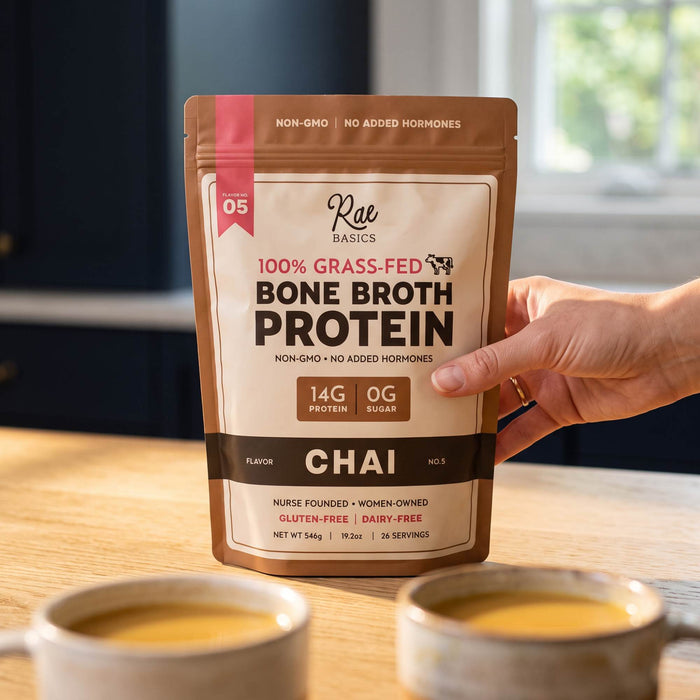
A scoop of Chai or Mocha whisked into a cup of steamed dairy milk. Nothing to steep, nothing to blend.
7. Protein mocha (about 17g)
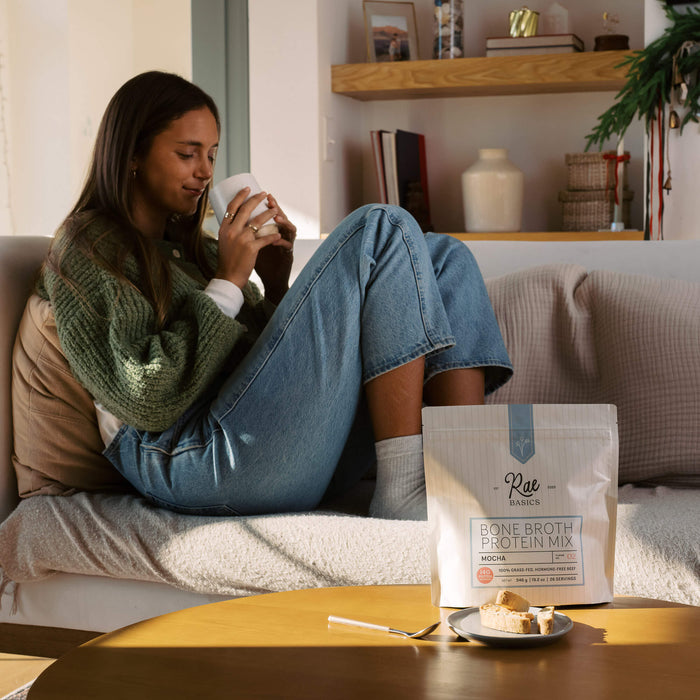
Your usual coffee with a scoop of Caffeinated Chocolate or Mocha stirred in, like our Morning Boost. Add a hard-boiled egg or two and you're near 30.
8. Egg muffins, made ahead
Whisk a dozen eggs with spinach and cheese, bake them in a muffin tin, and keep them in the fridge. Two or three plus a warm drink covers breakfast all week.
9. Chocolate mug cake (about 21g)
Ninety seconds in the microwave with a scoop of Classic Chocolate, an egg and oat flour. It eats like dessert. Recipe: Chocolate Mug Cake.
10. Leftovers
Last night's chicken, salmon or chili is a perfectly good breakfast. It doesn't have to look like breakfast food to count.
Dairy-free high-protein breakfast
If dairy doesn't agree with you, lean on eggs, tofu scrambles, leftover meat or fish, and a dairy-free protein drink. Our Bone Broth Protein Mix is dairy-free, with creaminess from organic coconut and oat milk, so a scoop made with water next to two eggs gets you to about 26g with no dairy at all. Oat and almond milk are creamy but low in protein, so the eggs or tofu have to do most of the work. If whey has been the problem, bone broth protein vs whey explains the difference.
Do you have to eat protein first thing in the morning?
No. If you aren't hungry at 6 a.m., don't force down a plate of eggs. What matters is that your first real meal has a solid dose of protein, instead of coffee alone until lunch. A warm drink with protein in it is often the easiest place to start, since you're probably already holding a mug.
Where Bone Broth Protein Mix fits
I started Rae Basics in my kitchen during IVF, when I wanted something clean, comforting and nourishing and couldn't find it on the shelf. One 21g scoop of grass-fed Bone Broth Protein Mix has 14g of protein, 10g+ of naturally occurring collagen and 0g sugar. Because it's collagen-rich, it's low in tryptophan, so it works best next to eggs, yogurt or milk rather than as your only protein. Every nutrition number is on Rae Basics at a glance.
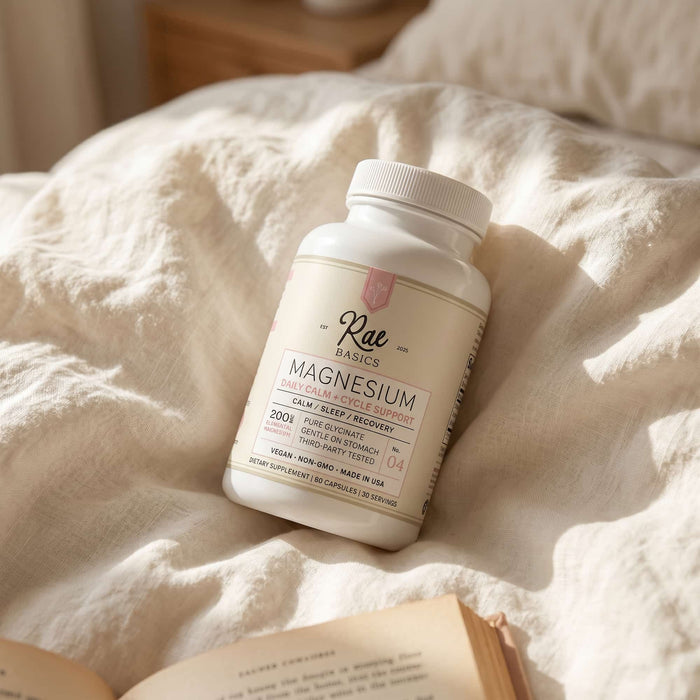
A morning mug pairs easily with an evening habit. NO. 04 Magnesium Glycinate is taken 30 to 60 minutes before bed, and protein at breakfast doesn't get in its way. I lay out a full sample day in protein in the morning, magnesium at night.
Quick answers
How much protein should I eat at breakfast in perimenopause?
Aim for about 25 to 30 grams. That's roughly two eggs plus a protein drink, or a Greek yogurt bowl with a little extra protein stirred in.
What is a 30g protein breakfast without protein shakes?
Two eggs with a 7 oz Greek yogurt is about 32 grams. Two eggs with half a cup of cottage cheese is about 26 grams, before you count the toast.
What is a good dairy-free high-protein breakfast?
Eggs or a tofu scramble with a dairy-free protein drink. Two eggs plus a scoop of Bone Broth Protein Mix made with water is about 26 grams.
Is a protein drink enough for breakfast?
It's a good start, especially made with milk. Add eggs, yogurt or fruit to make it a fuller meal.
Can I make these the night before?
Yes. Overnight oats, egg muffins and yogurt bowls can all be prepped ahead, so breakfast takes a minute on weekday mornings.
Sources
- Mamerow MM, Mettler JA, English KL, et al. Dietary protein distribution positively influences 24-h muscle protein synthesis in healthy adults. J Nutr. 2014;144(6):876-880.
- Leidy HJ, Ortinau LC, Douglas SM, Hoertel HA. Beneficial effects of a higher-protein breakfast on the appetitive, hormonal, and neural signals controlling energy intake regulation in overweight/obese, "breakfast-skipping," late-adolescent girls. Am J Clin Nutr. 2013;97(4):677-688.
- Maltais ML, Desroches J, Dionne IJ. Changes in muscle mass and strength after menopause. J Musculoskelet Neuronal Interact. 2009;9(4):186-197.
- U.S. Department of Agriculture, FoodData Central. Egg, whole, raw, fresh (FDC ID 171287). About 12.6g protein per 100g; a large egg is about 50g.
- U.S. Department of Agriculture, FoodData Central. Yogurt, Greek, plain, lowfat (FDC ID 170903). About 20g protein per 200g container.
- U.S. Department of Agriculture, FoodData Central. Cheese, cottage, lowfat, 1% milkfat (FDC ID 173417). About 14g protein per 1/2 cup.