Yes, you can take magnesium and protein on the same day, and for most healthy adults there's no reason to keep them apart. The simplest way to do both is a mug of Bone Broth Protein Mix with breakfast for 14g of protein, then magnesium glycinate 30 to 60 minutes before bed.
In this article
It's the routine I suggest to friends who ask where to start. Here's what each one does, whether they really "work together," a sample day, and how to space magnesium from medicines.
Can you take magnesium with protein?
Yes. I'm not aware of any research showing that protein from food or a drink gets in the way of a magnesium supplement. The interactions the NIH Office of Dietary Supplements flags for magnesium involve certain medicines, not protein foods.
So why split them across the day? Not because they clash. Protein does the most good early, in a meal that for a lot of women is coffee and nothing else. Magnesium glycinate is easy on most stomachs and slides into a wind-down habit you already have.
I'll be straight with you. Nobody has studied Bone Broth Protein Mix and magnesium glycinate as a pair, and there's no proven synergy between them. The case is plainer: they cover two different gaps many women have, and two small habits at opposite ends of the day are easy to keep.
Why protein belongs in the morning
Most women I talk to eat the least protein at breakfast and the most at dinner. After 40, that starts to matter. As estrogen falls, women tend to lose muscle mass and strength (Maltais and colleagues, 2009), and protein is one of the few levers you control. Spreading it out may help too. In one small study, adults who ate about 30 grams of protein at each meal had higher 24-hour muscle protein synthesis than adults who ate the same total mostly at dinner (Mamerow and colleagues, 2014).
One 21g scoop of Bone Broth Protein Mix has 14g of grass-fed beef bone broth protein, 10g+ of naturally occurring collagen, 0g sugar and 80 calories (90 for Chai). Next to two eggs, breakfast lands around 26g. It's collagen-rich and low in tryptophan, so keep eggs, yogurt, meat or fish in your day too. More ideas: high-protein breakfast ideas for perimenopause.
Why magnesium fits the evening
Magnesium is a mineral your body uses in more than 300 enzyme systems, including the ones behind muscle and nerve function, according to the NIH Office of Dietary Supplements. Women 31 and older need 320mg a day from food and supplements combined, and many adults fall short: national survey data cited by the NIH show 48 percent of Americans get less than they need from food and drinks.
You can take it any time. Most people pick the evening because it pairs with something they already do every night, and because magnesium supports normal muscle relaxation, which suits the end of the day. On sleep itself, a 2023 systematic review called the evidence limited and mixed (Arab and colleagues, 2023), so I think of magnesium as one part of a calm evening, not a sleeping pill.
Results build slowly. Give it 4 to 6 weeks of nightly use before you decide how it's working. Timing details are in when to take magnesium glycinate, and magnesium for sleep compares the forms.
Magnesium glycinate and collagen: the glycine overlap
This is the one spot where the two meet. Collagen is unusually rich in glycine, an amino acid, and magnesium glycinate is magnesium bound to glycine. Glycine has a small body of sleep research, but those studies gave about 3 grams of it on its own before bed (Bannai and Kawai, 2012). A 200mg magnesium serving carries well under that, and nobody has tested a morning collagen drink plus evening magnesium glycinate. So yes, you can take magnesium glycinate and collagen together, even in the same hour. Just don't expect the glycine to add up to something special.
A simple sample day
| When | What | Good to know |
|---|---|---|
| Breakfast | 1 scoop of Bone Broth Protein Mix in water, milk or coffee, plus eggs or yogurt | Caffeinated Chocolate has 60mg of caffeine, so keep it to mornings |
| Lunch and dinner | Protein at each meal, plus pumpkin seeds, beans or spinach | Food comes first for both |
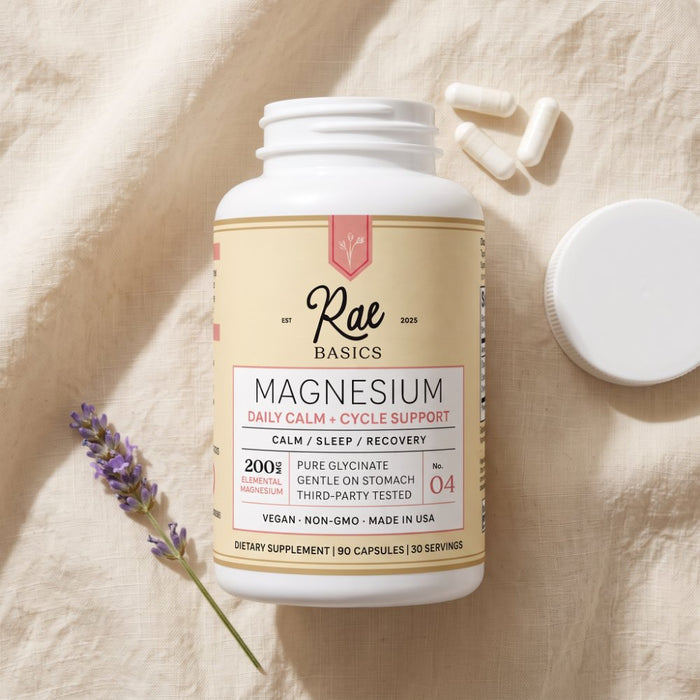
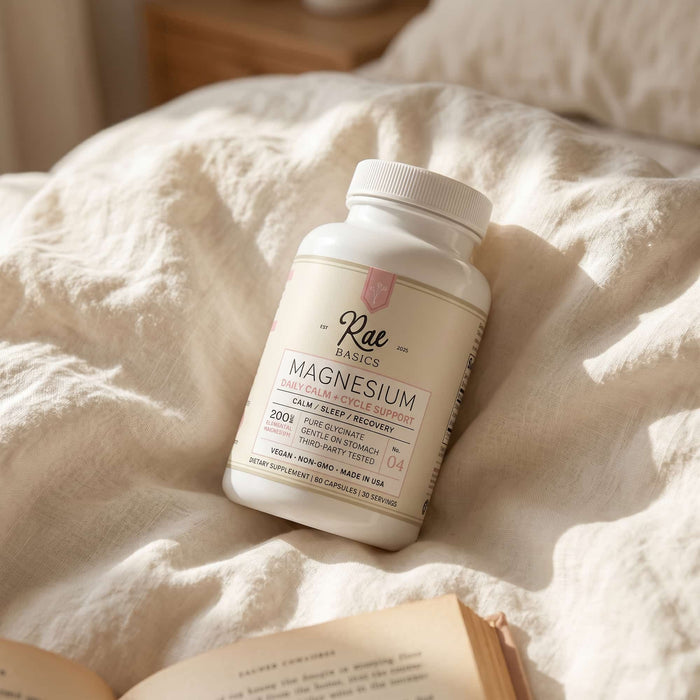
| 30 to 60 minutes before bed | 3 capsules of NO. 04 Magnesium Glycinate with water | 200mg of elemental magnesium, same time each night |
Want a warm mug at night too? Pick a caffeine-free flavor (Classic Chocolate, Mocha or Chai) and take your capsules alongside it, as in protein hot chocolate before bed. And if mornings are easier to remember, magnesium can move there. Doing it daily matters more than the hour.
How to start: one at a time
- Start with your bigger gap. Coffee-only breakfasts? Begin with the morning mug. Rough evenings? Begin with magnesium.
- Give it a week or two. Notice how your stomach handles it and whether the habit sticks.
- Add the other one. Keep the first exactly as it was, so you can tell which change is doing what.
Count all the magnesium you take from supplements, including multivitamins and antacids, and stay at or below the NIH's 350mg daily upper limit unless your clinician says otherwise. Magnesium from food doesn't count toward that limit.
Medicines and who should ask first
For healthy adults, the two are generally fine on the same day. Prescriptions are where I'd slow down, because magnesium can change how some medicines are absorbed.
| Medicine | What to do |
|---|---|
| Tetracycline or quinolone antibiotics | Take the antibiotic at least 2 hours before or 4 to 6 hours after magnesium (NIH) |
| Bisphosphonates for bone density | Keep them at least 2 hours apart from magnesium (NIH) |
| Thyroid medicine (levothyroxine) | MedlinePlus advises taking calcium and iron supplements at least 4 hours apart from levothyroxine. Ask your pharmacist whether to space magnesium the same way |
| Diuretics and acid reducers (PPIs) | These can change your magnesium levels. Ask your prescriber |
A bedtime magnesium habit already sits far from a thyroid pill taken first thing. Levothyroxine is usually taken on an empty stomach 30 to 60 minutes before breakfast, so have your mug after that window.
Check with your clinician before starting either one if you have kidney disease (your kidneys clear extra magnesium, and you may have a protein limit), if you're pregnant or breastfeeding, or if you're allergic to coconut, which gives the Mix its creaminess along with oat milk.
What the routine costs
| Product | One-time | Subscribe |
|---|---|---|
| Bone Broth Protein Mix, 26-serving bag | $59.99 | $52.99 a bag ($7 off) |
| NO. 04 Magnesium Glycinate, 1 bottle | $36 | $30 every 30 days |
| NO. 04 Magnesium Glycinate, 3 bottles | $102 | $85 every 90 days |
On subscription, a scoop comes to about $2.04 and a night of magnesium about $1, so the routine runs close to $3 a day. Subscriptions ship free, and you can skip, pause or change yours any time.
Ready to try it? Bone Broth Protein Mix covers mornings. NO. 04 Magnesium Glycinate covers evenings with 200mg of elemental magnesium from Chelamax non-buffered magnesium glycinate and just three ingredients. Every number is on Rae Basics at a glance.
Quick answers
Can I take magnesium and protein at the same time?
Yes. There's no known problem with protein foods and magnesium. Splitting them between morning and night is about easy habits, not avoiding a clash.
Can I take magnesium glycinate with collagen?
Yes. Both contain glycine, but there's no proven extra benefit from combining them.
Do I need both?
No. Each covers its own gap. If you only have room for one habit, start with the one that fills your bigger gap.
How long until I notice anything from magnesium?
Think weeks, not nights. Take it at the same time every night for 4 to 6 weeks before you judge it.
Can I drink Bone Broth Protein Mix at night instead?
Yes, in a caffeine-free flavor. Classic Chocolate, Mocha and Chai have 0mg of caffeine. Caffeinated Chocolate has 60mg per scoop.
I take thyroid medicine or antibiotics. Is this routine okay?
Usually, with spacing. Keep magnesium about 4 hours from levothyroxine and follow the NIH spacing for antibiotics. Your pharmacist can map out the timing with you.
Sources
- NIH Office of Dietary Supplements. Magnesium: Fact Sheet for Health Professionals.
- MedlinePlus, U.S. National Library of Medicine. Levothyroxine.
- Mamerow MM, Mettler JA, English KL, et al. Dietary protein distribution positively influences 24-h muscle protein synthesis in healthy adults. J Nutr. 2014;144(6):876-880.
- Maltais ML, Desroches J, Dionne IJ. Changes in muscle mass and strength after menopause. J Musculoskelet Neuronal Interact. 2009;9(4):186-197.
- Arab A, Rafie N, Amani R, Shirani F. The role of magnesium in sleep health: a systematic review of available literature. Biol Trace Elem Res. 2023;201(1):121-128.
- Bannai M, Kawai N. New therapeutic strategy for amino acid medicine: glycine improves the quality of sleep. J Pharmacol Sci. 2012;118(2):145-148.