Protein coffee is regular coffee with protein added, so you keep the caffeine and get roughly 14g to 20g of protein in the cup. It's worth the swap if coffee is often all you have before lunch. If you already eat a protein-rich breakfast, plain coffee is perfectly fine.
In this article
I get the appeal. On early shift days, a coffee with a scoop stirred in has been the only breakfast I got before rounds. Below is a side-by-side, what protein in the morning actually does, how to make protein coffee you can drink hot, and who shouldn't bother.
What is protein coffee (and what is "proffee")?
"Proffee" is the internet's name for protein plus coffee. Most versions are iced, usually a ready-to-drink protein shake poured over cold brew or espresso. Hot versions are less common because a lot of protein mixes clump in hot liquid. There are three basic ways to make it:
- Protein shake plus coffee, usually iced.
- A scoop stirred into brewed coffee, hot or iced.
- A protein creamer made ahead and poured in like milk.
Protein coffee vs regular coffee, side by side
Here's one cup of each, using USDA data for coffee and our label for the Mix.
| One cup | Caffeine | Protein | Sugar |
|---|---|---|---|
| Brewed coffee, 8 oz, black | About 95mg | 0g | 0g |
| Coffee plus a scoop of Caffeinated Chocolate | About 155mg (coffee plus 60mg) | 14g, more with milk | 0g from the Mix |
| Coffee plus a scoop of Mocha or Classic Chocolate | About 95mg (coffee only) | 14g, more with milk | 0g from the Mix |
| Mocha with milk, no coffee | 0mg | About 22g with 1 cup (8 oz) dairy milk | Only the natural sugar in the milk |
The last row surprises people. Mocha tastes like coffee but has 0mg of caffeine, so it can stand in for an afternoon coffee when you want the taste without the jitters.
“Regular coffee gives you the caffeine, but adding Rae Basics gives your coffee more than just caffeine. It also adds 14 grams of protein and the benefits of bone broth. It's an easy way to make morning coffee a little more nourishing without giving up the coffee you love.”
Skotie Rae, RN, founder
Protein coffee benefits: what it can actually do
It moves protein to the start of your day
A lot of us eat very little protein at breakfast and a lot at dinner. In a small study in the Journal of Nutrition, adults who spread their protein evenly across three meals (about 30g each) had higher 24-hour muscle protein synthesis than when most of it came at dinner (Mamerow and colleagues, 2014). A cup with 14g to 20g of protein gets you partway to a more even day.
It may help you feel fuller
A review in the American Journal of Clinical Nutrition found that higher-protein meals produce a modest increase in fullness and suggested aiming for about 25g to 30g of protein per meal (Leidy and colleagues, 2015). Protein coffee alone won't get you there, but with a piece of toast or an egg it can.
What it won't do
It won't soften the caffeine, it isn't a meal by itself, and it won't burn fat. It's a regular cup of coffee that does a bit more.
Can you drink protein coffee hot?
Yes, if you use a mix that dissolves in hot liquid and add it the right way. The trick is tempering. Make a paste with a little cool milk first, then add the hot coffee slowly.
- Put one scoop of Caffeinated Chocolate or Mocha in your mug.
- Add 2 to 4 oz of milk and stir into a smooth paste.
- Pour in 8 oz of hot coffee slowly while stirring, or froth for 10 seconds.
That's our Morning Boost recipe. Heat changes the shape of proteins, the same thing that happens when you cook an egg, but the grams still count toward your day. Our guide to putting bone broth protein in coffee covers clumping and heat in more detail.
If you'd rather have it iced, the Iced Mocha "Proffee" shakes a scoop of Mocha into cold milk and pours it over cold brew. It's my post-shift coffee.
Watch your caffeine total
The FDA cites 400mg a day, roughly four or five cups of coffee, as an amount not generally linked with negative effects in most healthy adults. It recommends checking with your health care provider if you're pregnant, trying to get pregnant or breastfeeding. A scoop of Caffeinated Chocolate in your coffee adds 60mg of caffeine. That's fine for a lot of people, but count it. If you're sensitive, use Mocha or Classic Chocolate in your coffee instead, since both have 0mg. Timing matters too. In one controlled study, a large dose of caffeine taken 6 hours before bed still disrupted sleep (Drake and colleagues, 2013). I'd keep the caffeinated cup to the morning.
Protein coffee vs mushroom coffee
Mushroom coffee blends ground coffee with mushroom extracts. Because some of the coffee is replaced, a cup often has less caffeine than regular coffee. Human research on those mushroom extracts, at the amounts used in these blends, is limited. Protein coffee is simpler: coffee plus a known amount of protein you can read on the label. One lowers caffeine and the other adds protein, so it comes down to which of those you care about.
Is protein coffee worth the swap?
- Worth it if coffee is often your breakfast, you have trouble getting protein before noon, or you want a warm drink that holds you over a little longer.
- Worth it if you're trying to cut back on caffeine. Swap one cup a day for Mocha and keep the coffee flavor.
- Skip it if you already eat eggs, yogurt or another solid protein breakfast and love your coffee black.
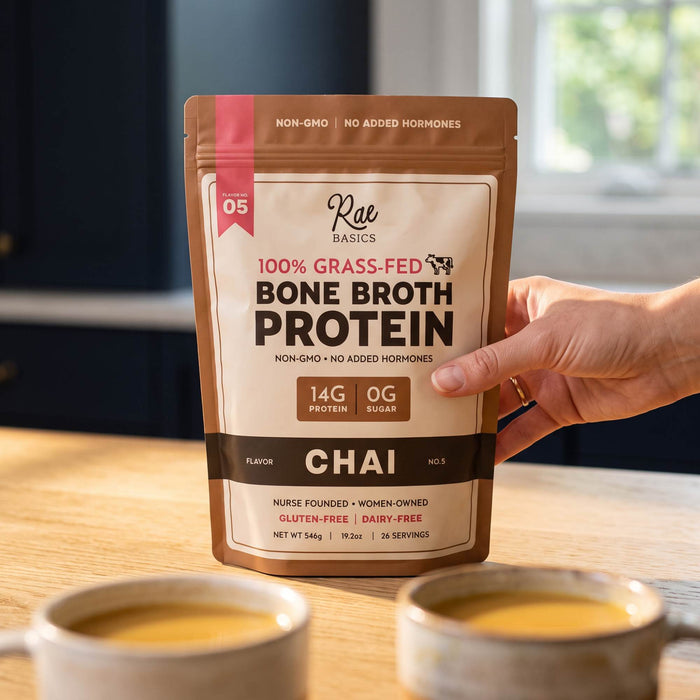
If you want to try it, our Bone Broth Protein Mix in Caffeinated Chocolate or Mocha has 14g of protein, 10g+ of naturally occurring collagen, 0g sugar and 3g of carbs per 21g scoop. A 26-serving bag is $59.99, about $2.31 a cup, and you can subscribe and save. Every number is on our Rae Basics facts page. For something caffeine-free in the evening, see our caffeine-free chai protein latte.
Quick answers
Is protein coffee better than regular coffee?
It isn't better or worse, just different. It keeps the caffeine and adds protein, which helps most if coffee is often your breakfast.
Can you make protein coffee hot?
Yes. Stir the scoop into a little cool milk to make a paste, then slowly add hot coffee while stirring. It dissolves without clumping.
How much caffeine is in protein coffee?
It's your coffee's caffeine, about 95mg in 8 oz of brewed coffee, plus whatever the mix adds. Caffeinated Chocolate adds 60mg per scoop, and Mocha and Classic Chocolate add none.
Does hot coffee destroy protein?
No. Heat changes the shape of proteins, like cooking an egg, but the protein still counts toward your day.
Can protein coffee replace breakfast?
It can be part of breakfast. With about 14g to 22g of protein, it works best next to a little real food, like toast, fruit or an egg.
Sources
- U.S. Department of Agriculture, FoodData Central. Beverages, coffee, brewed, prepared with tap water (FDC ID 171890). About 40mg caffeine per 100g, or about 95mg per 8 fl oz cup (237g).
- U.S. Food and Drug Administration. Spilling the Beans: How Much Caffeine Is Too Much?
- Mamerow MM, Mettler JA, English KL, et al. Dietary protein distribution positively influences 24-h muscle protein synthesis in healthy adults. J Nutr. 2014;144(6):876-880.
- Leidy HJ, Clifton PM, Astrup A, et al. The role of protein in weight loss and maintenance. Am J Clin Nutr. 2015;101(6):1320S-1329S.
- Drake C, Roehrs T, Shambroom J, Roth T. Caffeine effects on sleep taken 0, 3, or 6 hours before going to bed. J Clin Sleep Med. 2013;9(11):1195-1200.